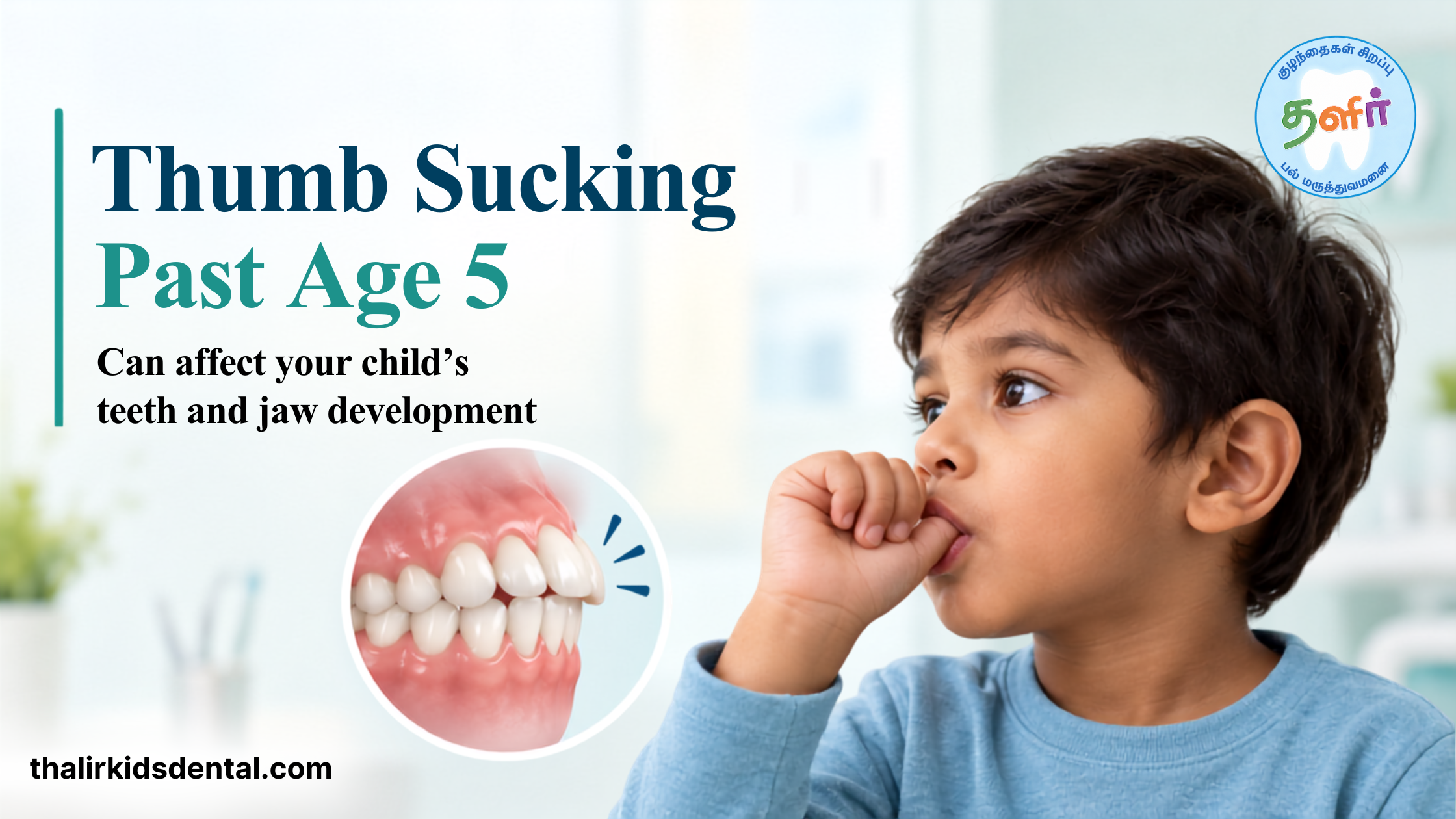
Thumb Sucking Past Age 5: When It Becomes an Orthodontic Concern
Thumb sucking is common during infancy and early childhood. It can help children feel calm, comfortable, and secure.
Most children naturally stop between ages 2 and 4. But thumb sucking past age 5 may need more attention because continued pressure can affect growing teeth and jaws.
Quick Tip: The effect depends on frequency, strength, and duration. Prolonged pressure can affect tooth position.
Thumb sucking is common during infancy and early childhood. It can help children feel calm, comfortable, and secure. Parents can learn more about these early comfort habits in our guide to thumb sucking and pacifier use .
Why Can Thumb Sucking Past Age 5 Be a Concern?
As children grow, their teeth and jaws continue to develop. Thumb sucking past age 5 may affect tooth alignment and bite development, especially when the habit is frequent, strong or prolonged.
What Changes Can Parents Notice?
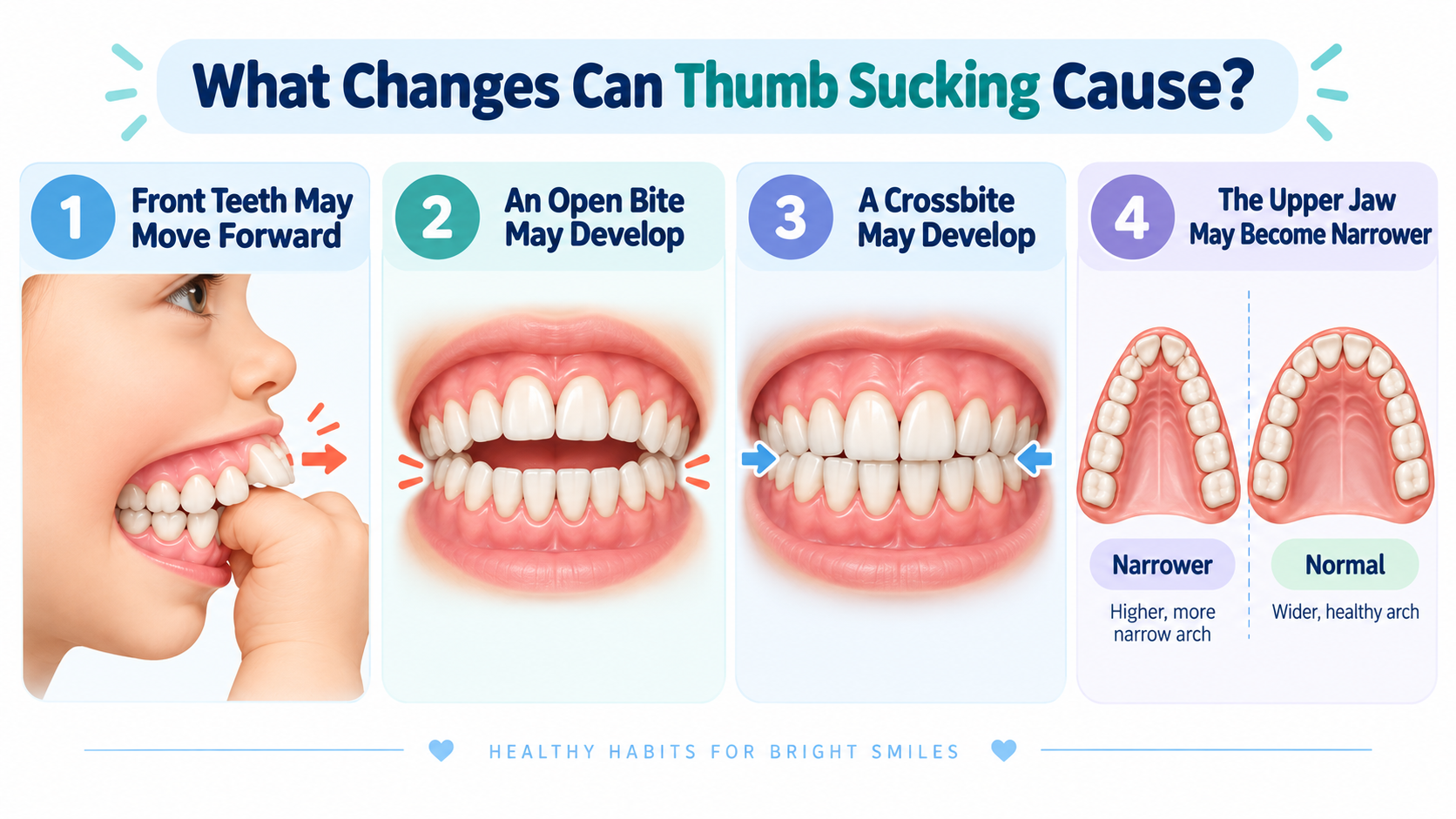
1. Forward Front Teeth (Increased Overjet)
Repeated thumb pressure may push the upper front teeth forward, making them appear more prominent.
2. Open Bite
A gap may develop between the upper and lower front teeth, preventing them from meeting properly when the mouth closes.
3. Crossbite
Some upper teeth may sit inside the lower teeth instead of outside them when the child bites down.
4. Narrow Upper Jaw or High-Arched Palate
Prolonged thumb sucking may contribute to a narrower upper dental arch, which can increase the risk of a crossbite. Changes in the shape of the palate may also be seen.
Research Note: Persistent thumb sucking is associated with a higher risk of dental malocclusion (incorrect tooth alignment). The risk depends on how often, how strongly and how long the child sucks their thumb.
Research Source: Influence of Oral Habits on Pediatric Malocclusion: Etiology and Preventive Approaches (2024)
Is Every Child Who Sucks Their Thumb at Age 5 at Risk?
Not necessarily. The effect varies from child to child. Frequency, intensity, and duration of the habit all matter.
“It is also important to remember that parents do not need to wait until age 5 before seeking advice.”
Dental evaluation may be recommended when the habit continues beyond age 3, particularly if changes in the bite are already visible.
How Can Parents Help?
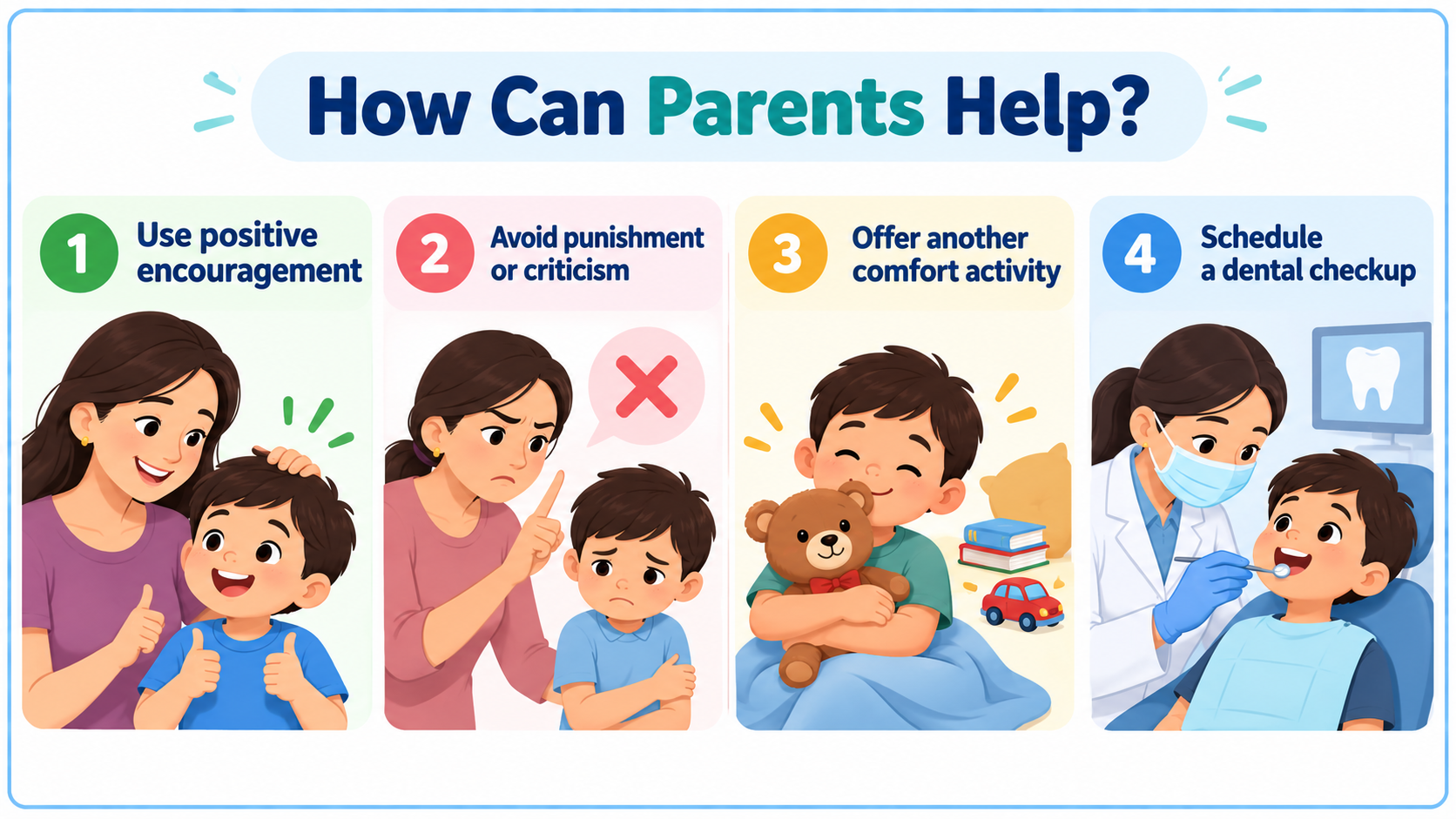
- Use positive encouragement Praise your child when they spend time without sucking their thumb.
- Avoid punishment or criticism Scolding can increase anxiety and make the habit more difficult to stop.
- Offer another comfort activity A favourite toy, blanket, or calming activity may help replace thumb sucking.
- Schedule a dental checkup A pediatric dentist can examine the teeth, bite, and jaw development.
Remember: Stopping thumb sucking is a process. Gentle encouragement and professional guidance can be more helpful than punishment.
Also Read: Learn more about keeping your child’s teeth healthy in our guide to Best Pediatric Dental Care for Kids’ Healthy Smiles .
Frequently Asked Questions
Find quick answers to common questions about this topic.
Have questions about your child's dental health?
Our specialists at Thalir Dental Clinic are here to help.
Chat with Us