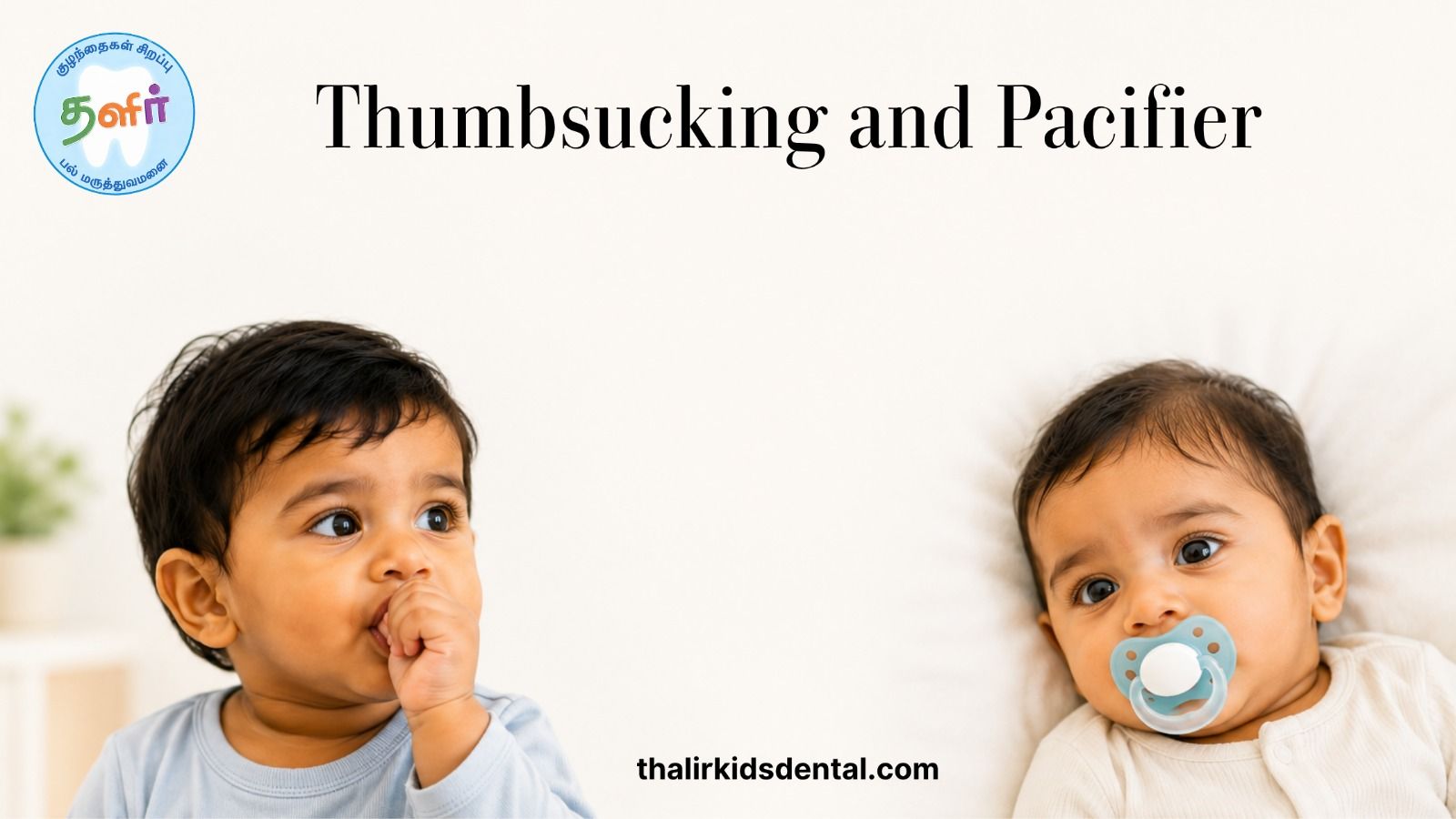
What Does Thumbsucking and Pacifier Use Actually Mean for Your Child?
Both habits begin as comfort responses, helping babies and toddlers feel safe, calm, and secure in a world that is still very new to them. Most parents accept these habits without concern in the early years, and for good reason.
Learning why milk teeth matter? during this stage helps parents understand how prolonged thumbsucking and pacifier use can quietly affect their child's dental development. The real question is not whether your child does it. It is how long it continues and what happens to the teeth and jaw when it does.
How These Habits Affect Teeth and Jaw Development?
The mouth is constantly developing in the early years, with teeth erupting, the jaw growing, and the bite finding its natural alignment.These changes make early years the most critical time to watch for kids teeth problems before they quietly take hold.
What these habits can cause:
- Front teeth that tilt outward creating an open bite
- Upper teeth that protrude beyond the lower teeth visibly
- Narrowing of the upper jaw affecting long term bite alignment
- Lisping and speech difficulties from altered tongue positioning
- Changes in facial structure that become harder to correct over time
Stop Thumbsucking and Pacifier Use Before Damage Begins
Knowing when to stop pacifier use is one of the most important decisions a parent makes for their child's dental future.
Key age milestones every parent should know:
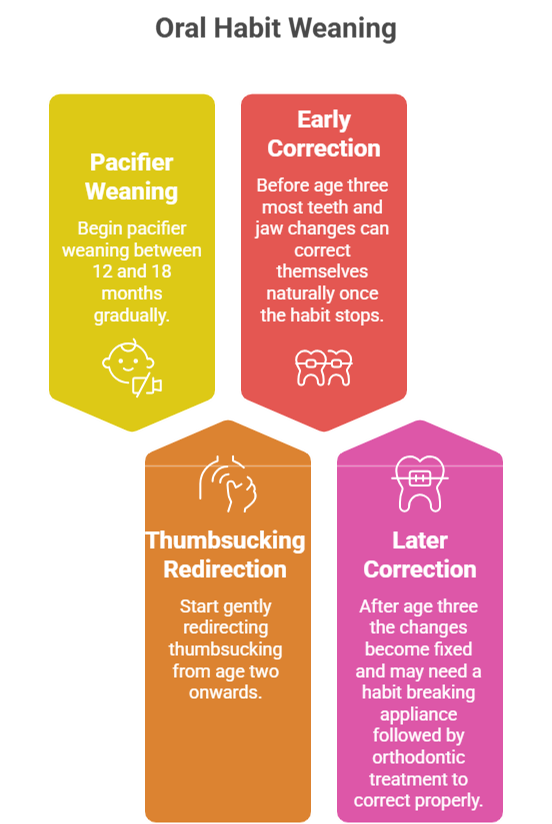
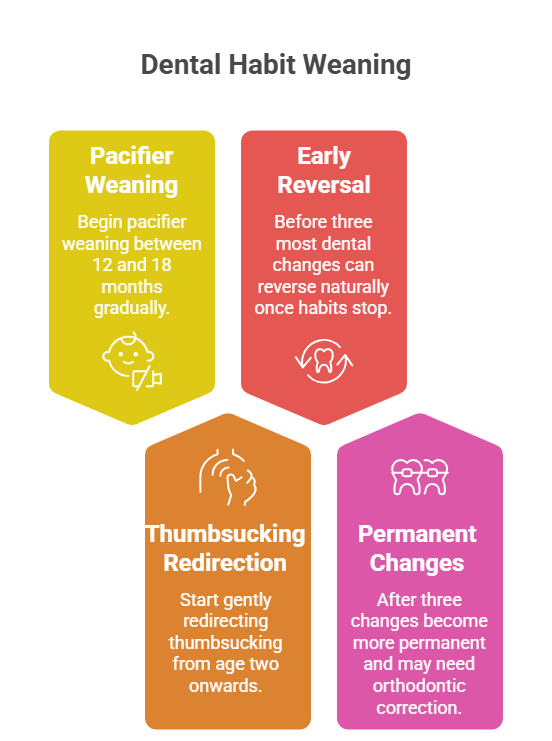
- Begin pacifier weaning between 12 and 18 months gradually
- Start gently redirecting thumbsucking from age two onwards
- Before age three most teeth and jaw changes can correct themselves naturally once the habit stops
- After age three the changes become fixed and may need a habit breaking appliance followed by orthodontic treatment to correct properly
How to Stop Thumbsucking in Children?
- Identify triggers like anxiety, boredom, or tiredness and address them directly
- Use a thumb guard or bandage as a gentle physical reminder during the day
- Keep little hands busy with activities that naturally discourage thumbsucking
- Speak with a pediatric dentist who can guide the process with professional support
How Do You Know When It Is Too Late?
Every child is different, but there are clear warning signs that show how pacifiers and thumb sucking impact dental development? and whether these habits have already begun affecting your child's oral health. Watch carefully for these signals before the damage becomes harder to reverse.
- Open bite or protruding front teeth becoming visibly noticeable
- Speech difficulties or lisping that was not present before
- Habit continuing strongly beyond the age of three
- Child showing no signs of naturally stopping on their own
When to Visit a Dentist?
If your child is above three and the habit continues, visit a pediatric dentist early. For families seeking pediatric dental care in Erode, Thalir Kids Dental Clinic specializes in guiding families through exactly these concerns with warmth, expertise, and child friendly care from the very first visit.
Your child's smile is still forming. The right support now protects everything that comes next, especially when managing Thumbsucking and Pacifier habits.
Have questions about your child's dental health?
Our specialists at Thalir Dental Clinic are here to help.
Chat with Us