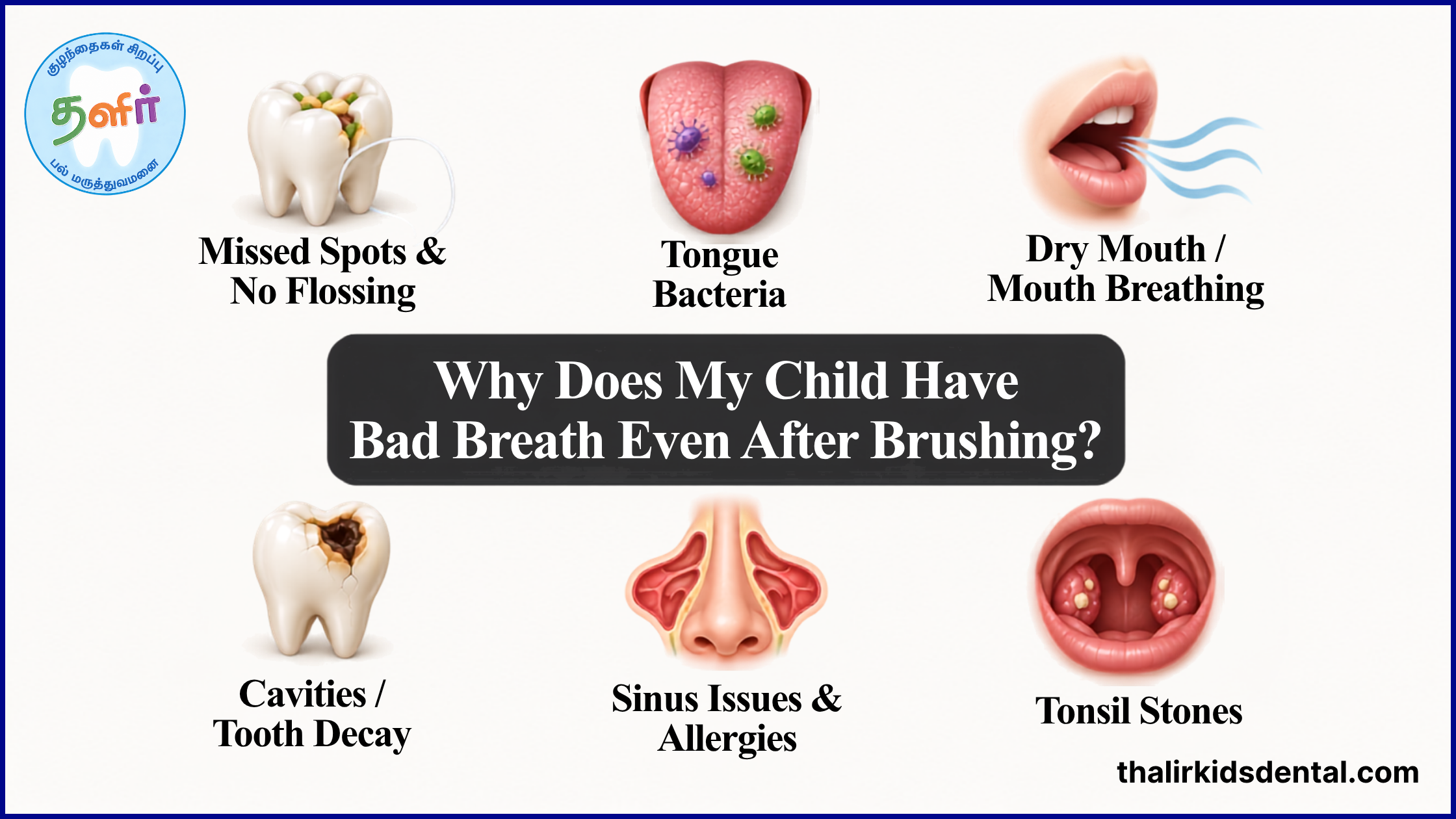
Why Does My Child Have Bad Breath Even After Brushing?
If your child brushes regularly and their breath is still off, it's not necessarily a hygiene problem. Here's what's really going on.
A child can have bad breath even after brushing because standard toothbrushes miss bacteria on the tongue, between teeth, or in the throat.
Common Hidden Causes
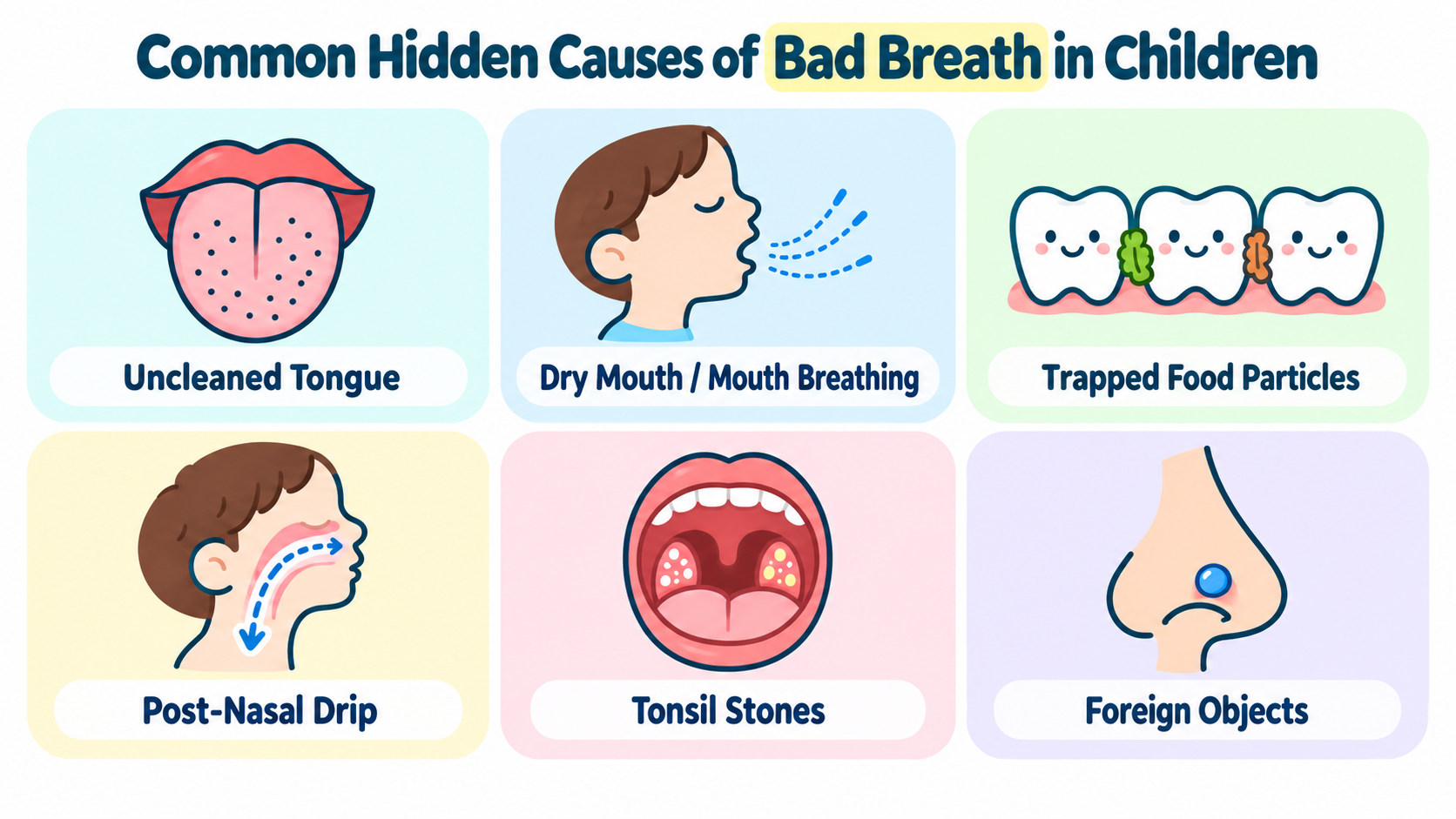
1. Uncleaned Tongue
The rough surface of the tongue traps food particles and bacteria that brushing teeth alone simply doesn't reach.
2. Dry Mouth or Mouth Breathing
Sleeping with an open mouth reduces saliva, which normally washes away odor-causing bacteria throughout the day and night.
3. Trapped Food Particles
Cavities, deep tooth grooves, or tight spaces between teeth harbor bacteria that only flossing can actually clear.
If you also notice unusual changes in your child's tooth colour, our guide on why some kids have yellow teeth even with good brushing explains other possible causes.
4. Post-Nasal Drip
Allergies or sinus issues cause mucus(thick liquid) to drain down the back of the throat, feeding the bacteria that cause odor.
5. Tonsil Stones
Small, generally harmless clusters of bacteria and debris can get trapped in the folds of the tonsils.
6. Foreign Objects
Very young children may accidentally lodge a small piece of food or object in their nose, which can cause a surprisingly strong odor.
How Common Is This Really?
This isn't a rare issue. In fact, halitosis(bad breath) in children is far more common than most parents assume.
One large study found that parents reported noticing bad breath in 74% of children, and that it can affect a child's confidence, social comfort, and even how they feel within the family.
Halitosis significantly impacts children's emotional well-being, with many kids reported to feel troubled, shy, or embarrassed as a direct result.
Simple Ways to Help at Home
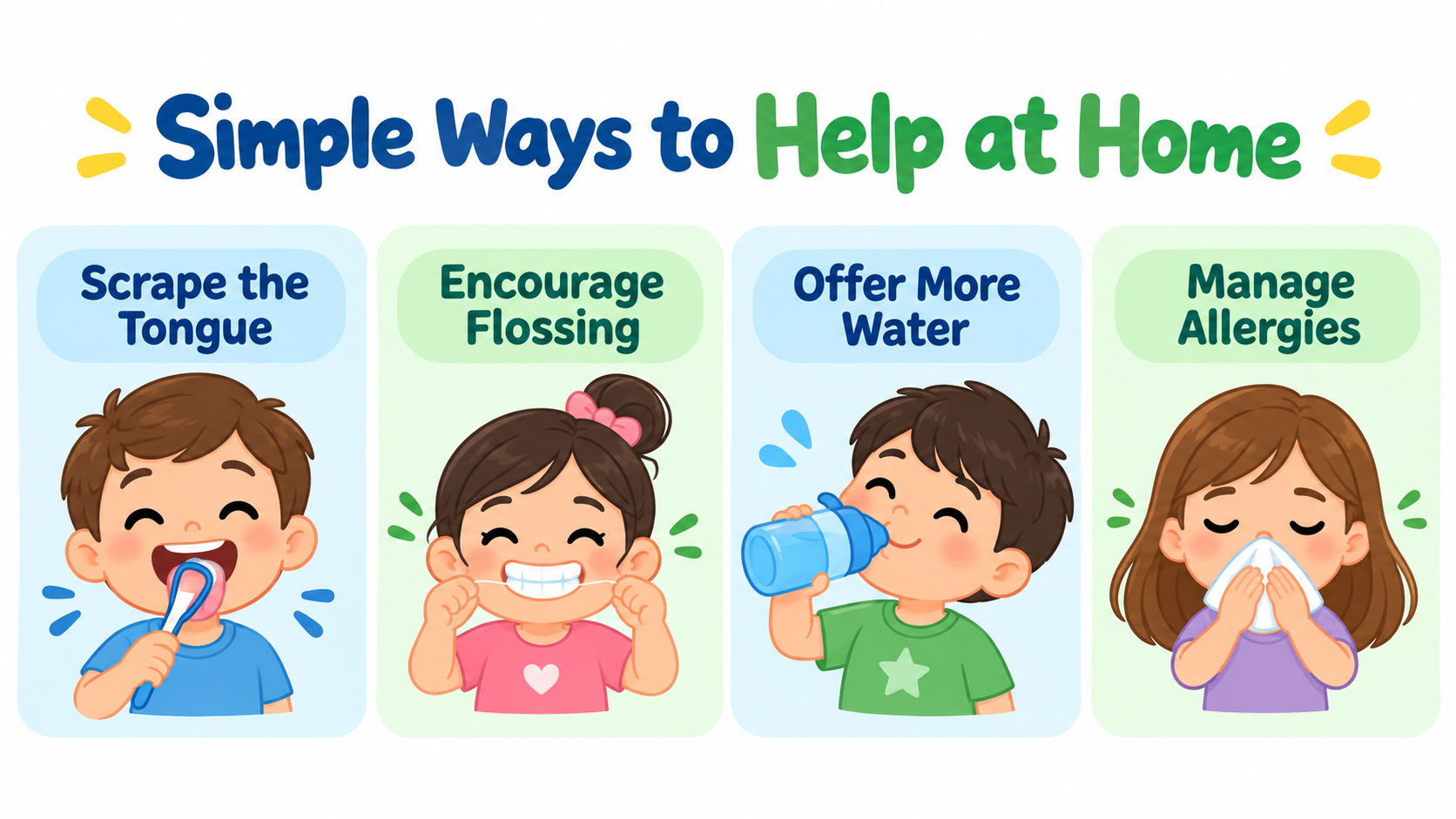
- Scrape the Tongue Gently clean your child's tongue once a day using a soft toothbrush or a tongue scraper.
- Encourage Flossing Clean between teeth daily where bristles simply can't reach.
- Offer More Water Keeping your child hydrated boosts saliva production and helps stop dry mouth before it starts.
- Manage Allergies If post-nasal drip or congestion(blocked nose) seems to be the trigger, treating the underlying allergy often clears up the breath issue too.
When to See a Doctor or Dentist
Watch For: Schedule an appointment with a pediatric dentist if bad breath lasts more than a few weeks despite good hygiene, or if your child also has painful gums, toothaches, constant mouth breathing, or swollen tonsils.
These can point to something beyond a simple brushing gap, and are worth having properly checked.
A quick dental visit can also rule out cavities or infections that aren't visible at home, which is often the fastest way to solve persistent cases.
For a broader guide to maintaining your child's oral health, explore our best pediatric dental care for kids’ healthy smiles.
Source: PMC/NCBI, Parental Perception of Oral Halitosis in Children
Frequently Asked Questions
Find quick answers to common questions about this topic.
Have questions about your child's dental health?
Our specialists at Thalir Dental Clinic are here to help.
Chat with Us