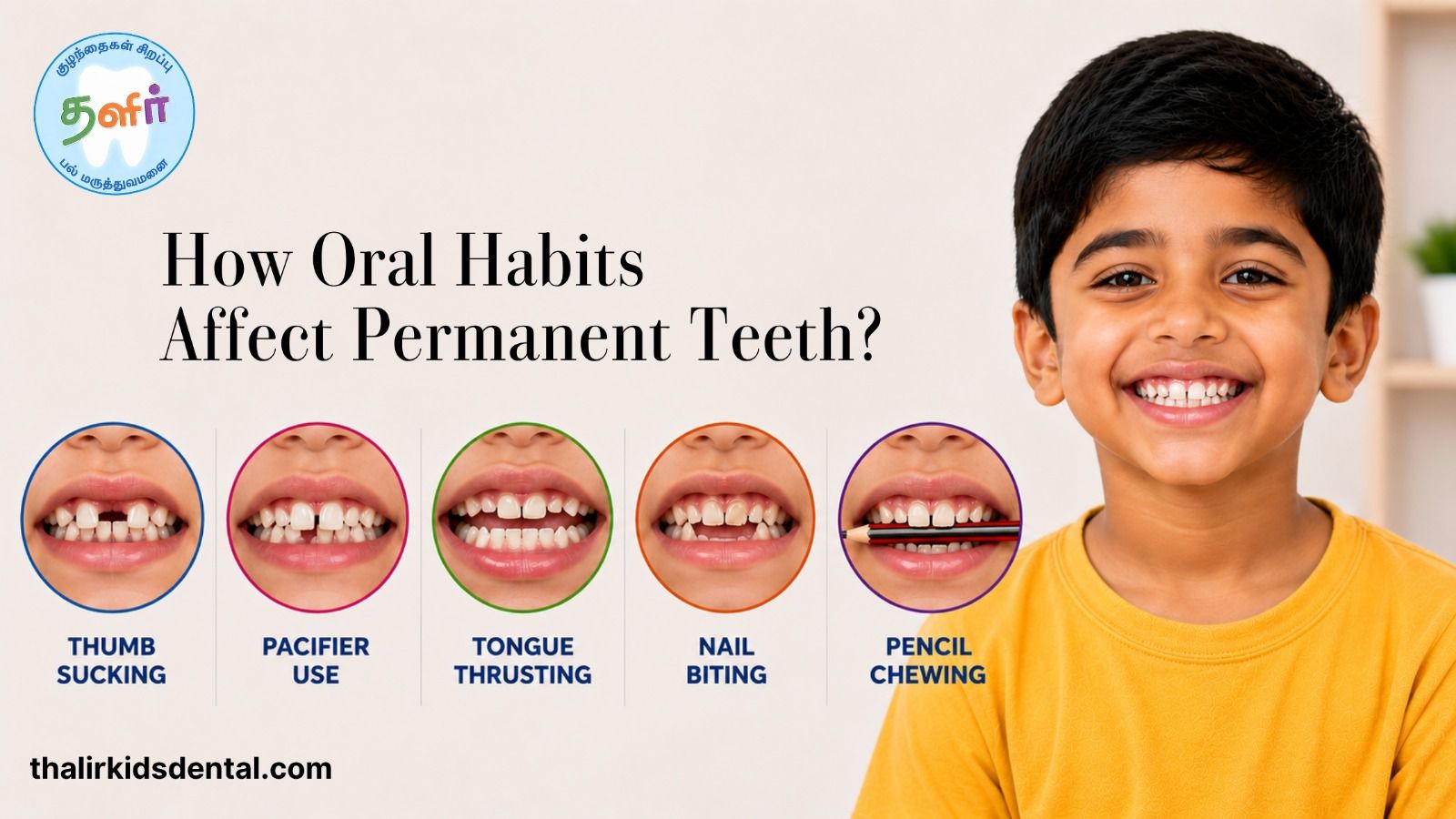
What Oral Habits Affect Permanent Teeth and Why Every Parent Must Know
Permanent teeth arrive only once. Unlike milk teeth, which eventually fall out, permanent teeth are meant to last for many years. This is why the oral habits children develop during their early years deserve attention from parents. Some habits can influence tooth alignment, bite development, and overall oral health if they continue for a long time.
Oral Habits That Can Affect Permanent Teeth
Many dental concerns develop gradually rather than appearing suddenly. Some habits may look harmless when children are young, but prolonged habits can place pressure on developing teeth and jaws.
Common Oral Habits to Watch in Children
- Thumb sucking and prolonged pacifier use
- Mouth breathing
- Nail biting
- Tongue thrusting
- Teeth grinding
- Poor brushing habits
- Frequent sugary snacks and drinks
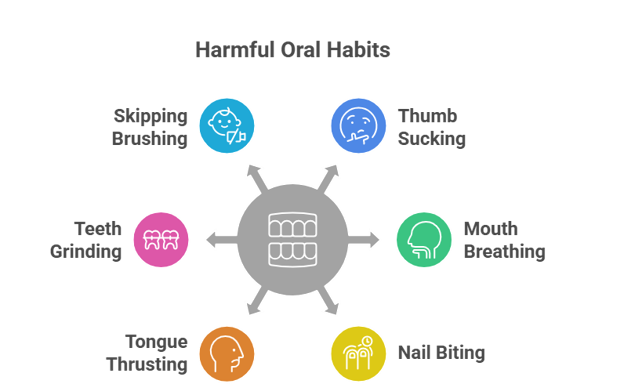
Not every child who develops one of these habits will experience a dental problem. However, habits that continue for a long time should be discussed with a pediatric dentist.
1. Thumb Sucking and Pacifier Use
Thumb sucking and pacifier use are common during infancy and early childhood. They can provide comfort, but prolonged sucking habits may affect developing teeth and the shape of the bite.
Parents may notice:
- Changes in the position of front teeth
- An open bite
- Changes in the upper jaw
- Difficulty with proper tooth alignment
If thumb sucking or pacifier use continues as permanent teeth begin developing, professional guidance can help parents understand whether intervention is needed.
Read more about thumb sucking and pacifier use in children.
2. Mouth Breathing
Some children breathe through their mouths because of nasal congestion, allergies, enlarged tonsils, or other concerns. Occasional mouth breathing may not be a problem, but persistent mouth breathing deserves attention.
It may be associated with:
- Dry mouth
- Increased risk of tooth decay
- Changes in tongue position
- Tooth alignment concerns
- Changes in facial development
Parents should pay attention if a child regularly sleeps with their mouth open, snores, or frequently breathes through the mouth.
If the habit continues, a pediatric dentist or appropriate healthcare professional can help identify the possible cause.
3. Tongue Thrusting
Tongue thrusting occurs when the tongue pushes against or between the teeth during swallowing or while resting.
When this habit continues over time, the repeated pressure may affect the position of developing teeth.
Possible signs include:
- Front teeth that do not meet properly
- Tongue positioned between the teeth
- Changes in tooth alignment
- Difficulty with certain speech sounds
Early assessment can help determine whether tongue positioning is affecting dental development.
4. Nail Biting
Nail biting is another common habit among children. It may happen when a child feels nervous, bored, or stressed.
Frequent nail biting can:
- Put pressure on front teeth
- Cause small chips or cracks
- Contribute to tooth wear
- Bring bacteria from the hands into the mouth
Instead of simply telling children to stop, parents can identify when the habit occurs and encourage alternative activities.
5. Teeth Grinding in Children
Some children grind or clench their teeth, particularly while sleeping. Occasional grinding does not always indicate a serious problem, but frequent grinding may cause tooth wear.
Parents may notice:
- Grinding sounds during sleep
- Worn tooth surfaces
- Tooth sensitivity
- Morning jaw discomfort
- Headaches
If teeth grinding in children happens regularly, a dental examination can help determine whether the child needs further evaluation or treatment.
6. Poor Brushing Habits
Poor brushing habits can allow plaque and bacteria to build up on children’s teeth, increasing the risk of cavities and gum problems. Skipping night-time brushing or using an incorrect brushing technique can make these problems more likely.
Parents should encourage children to:
- Brush twice a day
- Use fluoride toothpaste
- Brush all tooth surfaces gently
- Avoid rushing through brushing
- Learn the proper way to brush teeth
Building a consistent tooth brushing routine from an early age can help children maintain better oral hygiene as they grow.
7. Frequent Sugary Snacks and Drinks
Frequent exposure to sugary foods and drinks can increase the risk of tooth decay. This is especially important during childhood when children may snack several times throughout the day.
Common examples include:
- Candies and chocolates
- Biscuits
- Sweetened drinks
- Packaged fruit juices
- Sugary cereals
- Sticky snacks
Parents can encourage healthier choices by offering water, whole fruits, vegetables, and balanced meals. Frequent sugar exposure can increase the risk of tooth decay in both milk and permanent teeth, so developing healthier eating habits early can help protect children's teeth as they grow. Try these low-sugar snacks for kids to help reduce the risk of tooth decay and support healthier teeth.
Habits to Watch During the Milk Teeth Years
Many habits that can affect permanent teeth begin during the milk teeth stage. Paying attention early can help parents address concerns before they become more difficult to manage.
Parents should watch for:
- Frequent sugary snacks and drinks
- Sweetened drinks given at bedtime
- Lack of a regular brushing routine
- Delayed first dental visits
- Ignoring early signs of tooth decay
Milk teeth may be temporary, but the habits formed around them are important. Regular brushing, dental visits, and healthy food choices can support the development of healthier permanent teeth.
Build Healthy Habits Early
Parents can help children develop better oral habits by encouraging:
- Brushing twice daily with fluoride toothpaste
- Flossing when two teeth touch each other
- Drinking water instead of sugary drinks
- Wearing a mouthguard during contact sports
- Regular dental checkups
These simple routines can help children maintain better oral health as their permanent teeth develop.
When Should Parents See a Dentist?
If your child regularly grinds their teeth, breathes through the mouth, has difficulty with tooth alignment, or continues a potentially harmful oral habit, consider scheduling a dental examination.
Early evaluation allows a pediatric dentist to identify concerns and guide parents on appropriate steps.
At Thalir Kids Dental Clinic, children receive child-focused dental care and guidance to support healthy oral development. Every habit a child builds today can contribute to the smile they carry into the future.
Frequently Asked Questions (FAQs)
1. What oral habits can affect permanent teeth?
Habits such as prolonged thumb sucking, mouth breathing, tongue thrusting, nail biting, teeth grinding, poor brushing, and frequent sugary snacks may affect a child’s dental health.
2. Can thumb sucking affect permanent teeth?
Yes. Prolonged thumb sucking may affect tooth position and bite development. A pediatric dentist can guide parents if the habit continues.
3. Is teeth grinding in children a concern?
Occasional teeth grinding may not be serious, but frequent grinding can cause tooth wear, sensitivity, and jaw discomfort. A dental checkup can help identify the cause.
4. Can poor brushing habits affect permanent teeth?
Yes. Poor brushing allows plaque to build up and increases the risk of tooth decay and gum problems. Teaching children proper brushing habits early is important.
5. Can sugary snacks affect permanent teeth?
Frequent sugary snacks and drinks can increase the risk of tooth decay. Parents can help protect permanent teeth by offering water, balanced meals, fruits, vegetables, and lower-sugar snacks.
6. When should parents consult a pediatric dentist?
Parents should consider a dental visit if a child has persistent mouth breathing, teeth grinding, unusual tooth alignment, prolonged oral habits, tooth pain, or signs of decay.
Frequently Asked Questions
Find quick answers to common questions about this topic.
Have questions about your child's dental health?
Our specialists at Thalir Dental Clinic are here to help.
Chat with Us