Does Your Child Need a Crown? What Is Dental Crown Treatment?
“A baby tooth may be temporary, but protecting it can help your child eat, speak and smile comfortably until the permanent tooth is ready.”
Your child's dentist recommends a crown. You might wonder, "Aren't crowns just for adults?"
Children may need them too, especially when a baby tooth has extensive decay or damage.
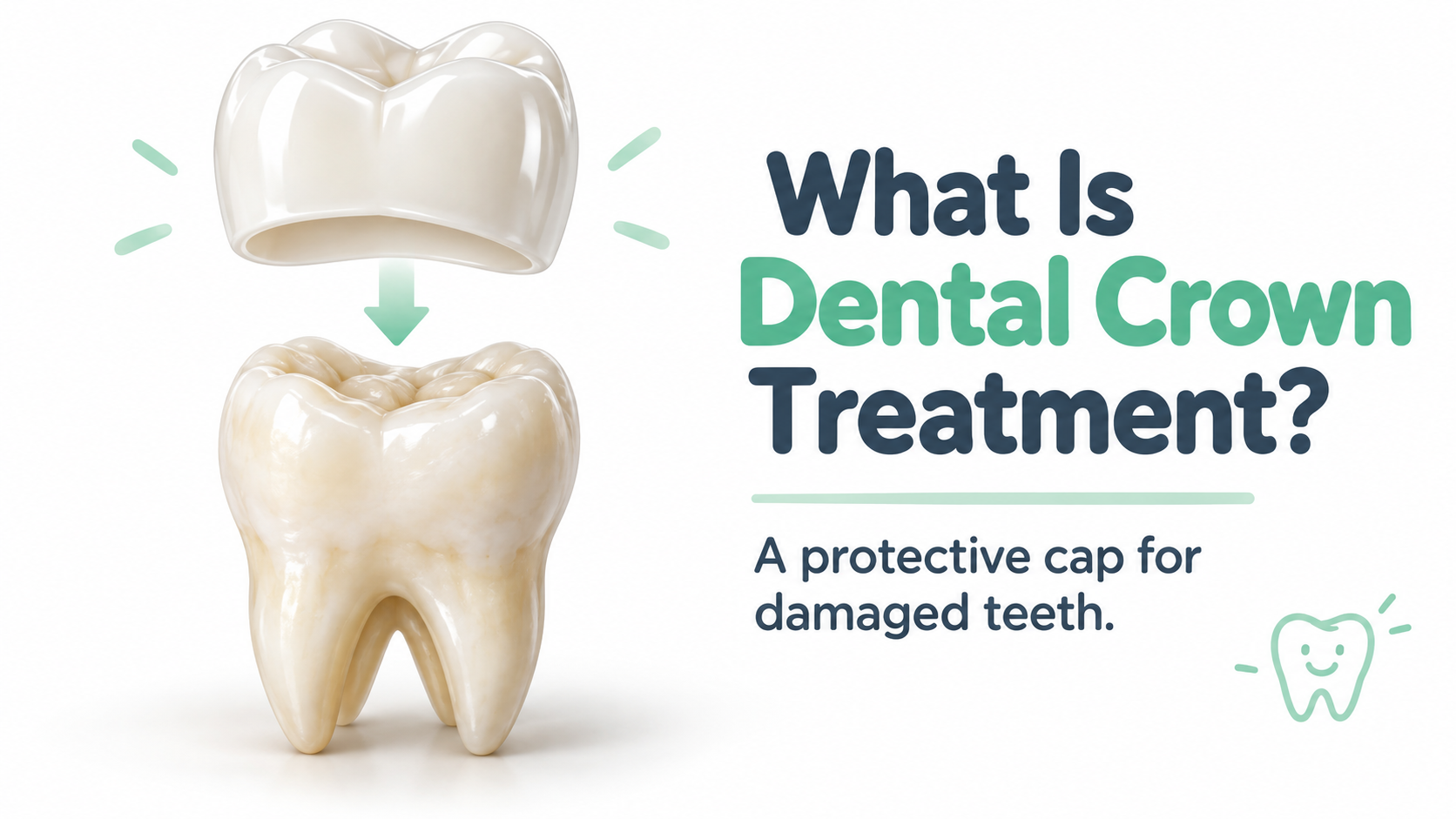
What is dental crown treatment? It involves placing a tooth-shaped cap over a weakened tooth to restore its shape, function and strength. The dentist determines whether this is suitable after examining the tooth.
Why Would a Child Need a Dental Crown?
Baby teeth help with chewing, speech and maintaining space for permanent teeth. A crown can sometimes preserve a damaged baby tooth until it naturally falls out.
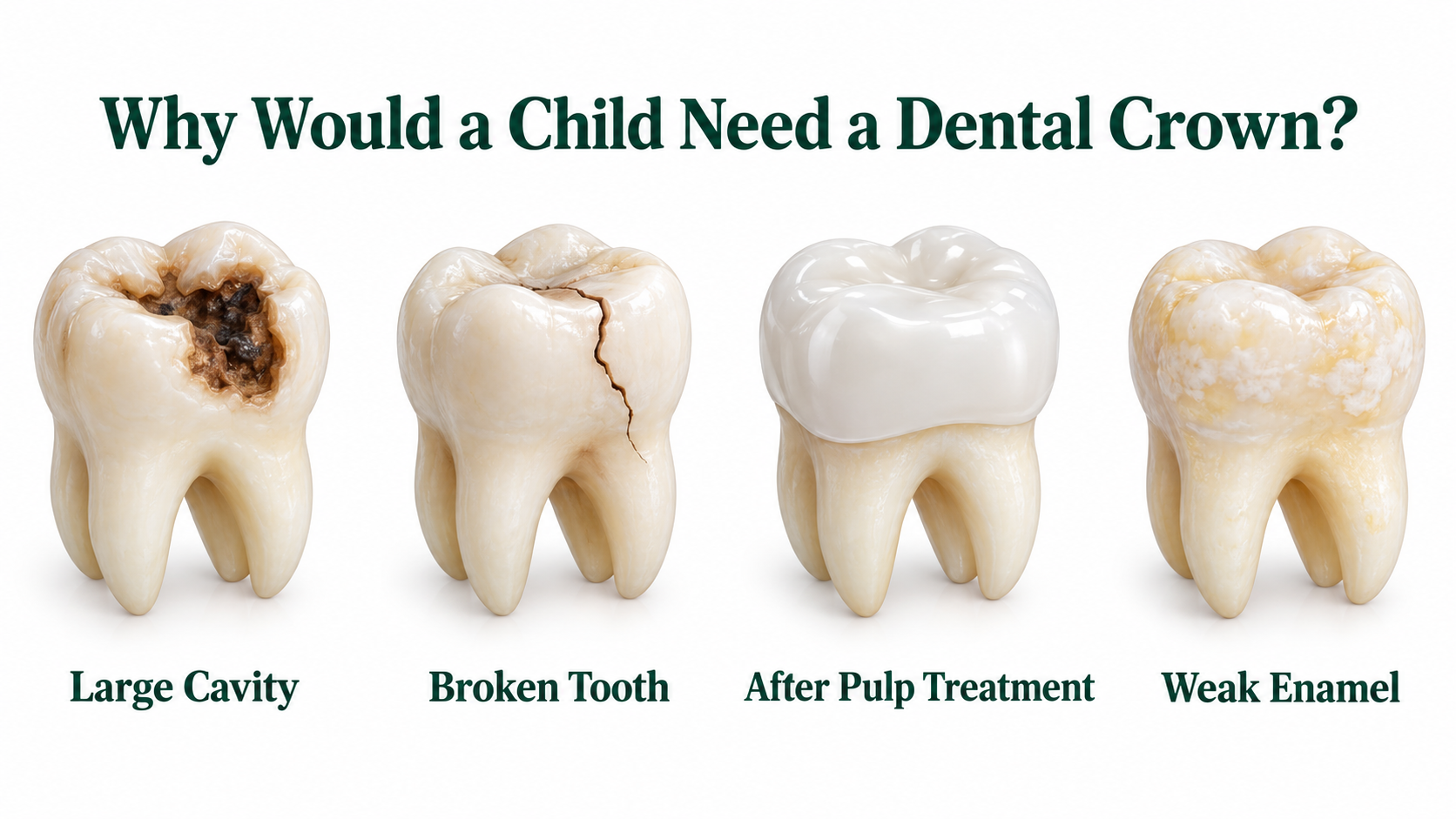
| Reason | Why a crown may help |
|---|---|
| Large cavity | Covers a tooth when decay affects several surfaces. |
| Broken or weakened tooth | Helps restore the shape and function of a restorable tooth. |
| After pulp treatment | May protect a baby tooth following treatment of its inner tissue. |
| Weak enamel | Provides coverage when an enamel defect leaves a tooth vulnerable. |
Dental Crown vs Filling: What's the Difference?
Both treatments repair damaged teeth, but they provide different levels of coverage.
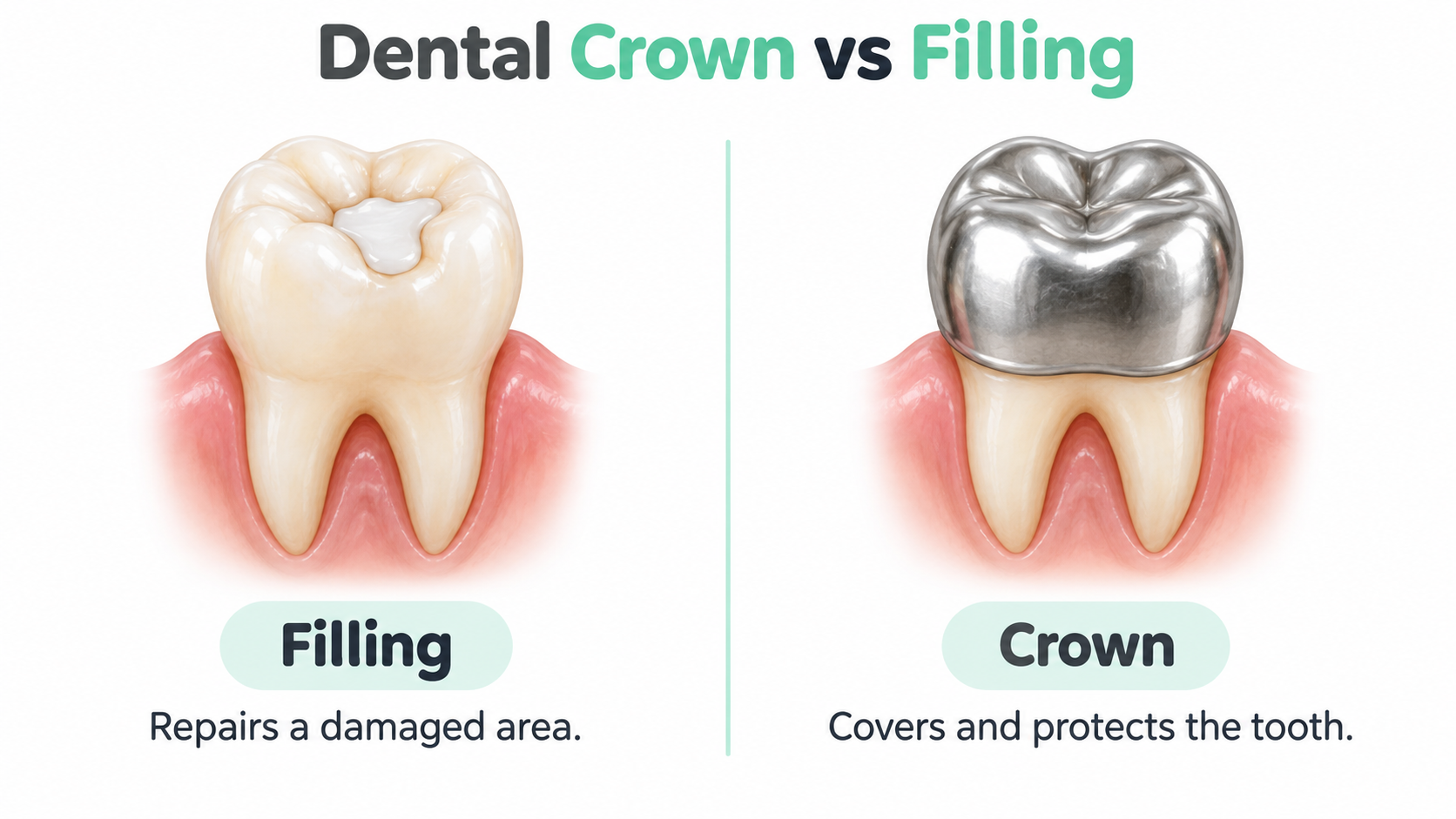
| Dental filling | Dental crown |
|---|---|
| Repairs a specific damaged area. | Covers most or all of the visible tooth. |
| Often suitable for smaller cavities. | May be recommended for extensive damage. |
| Preserves more tooth structure when appropriate. | Provides broader coverage for a weakened tooth. |
For example, a small cavity on a molar may need only a filling. When decay affects several surfaces, a crown may offer more reliable coverage.
Remember: A crown is not automatically better than a filling. The right treatment is the one that suits the tooth's actual condition.
What Types of Dental Crowns Are Used for Kids?
Pediatric crowns are available in different materials. Their suitability depends on the tooth's position, remaining structure and treatment requirements.
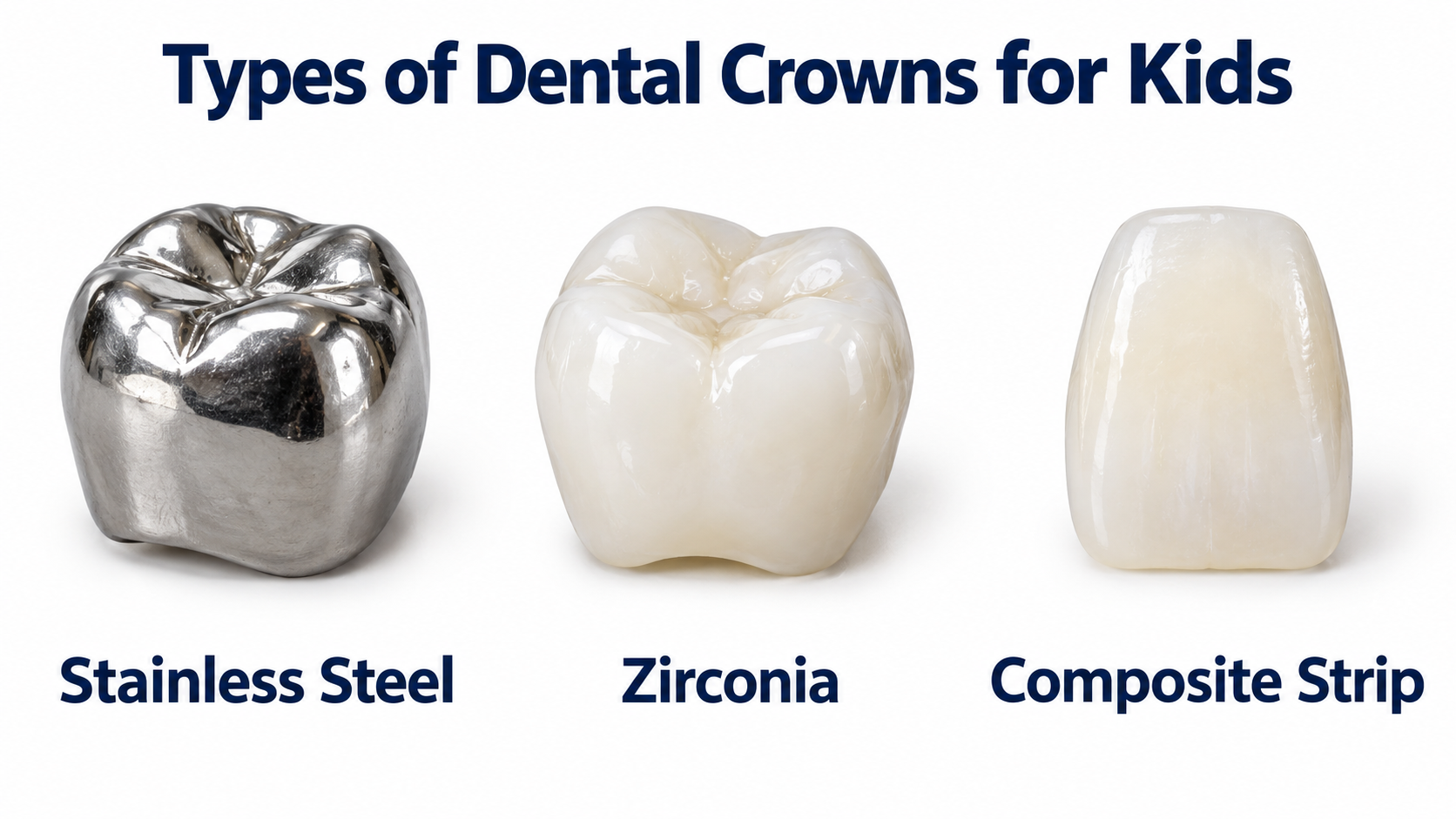
1. Stainless Steel Crowns
Silver-coloured crowns commonly used for baby molars. They provide durable coverage.
2. Zirconia Crowns
Tooth-coloured crowns that offer a natural appearance. Suitability depends on the tooth and treatment needs.
3. Composite Strip Crowns
Tooth-coloured restorations sometimes used for damaged front baby teeth.
The choice is not simply between silver and white. Fit, tooth location, durability and the child's needs all matter.
What Happens During a Child's Dental Crown Treatment?
The exact procedure varies depending on the crown and the tooth's condition.
- Examination: The dentist checks the tooth and may take an X-ray.
- Treatment planning: The dentist explains whether a crown or another treatment is appropriate.
- Tooth preparation: Depending on the technique, decay may be removed and the tooth shaped.
- Crown placement: The crown is fitted and secured using dental cement or suitable bonding material.
- Final check: The dentist checks the fit and bite and explains aftercare.
Did you know? For selected baby molars, the Hall Technique allows a stainless steel crown to be placed without conventional drilling. However, it is not appropriate for every tooth
Will Dental Crown Treatment Hurt My Child?
Local anaesthetic may be used when needed to keep your child comfortable during treatment.
The crowned tooth may feel different at first, and your child's bite may need time to adjust. Contact the dentist if your child experiences persistent pain or difficulty biting.
How Do You Care for a Child's Dental Crown?
A crowned tooth still needs daily cleaning. Good daily oral hygiene also helps prevent further decay. Parents can learn more about how to prevent cavities in kids and build healthy habits at home.
Aftercare
checklist |
|---|
Brush twice daily. |
Clean between touching teeth as
advised. |
Avoid very hard or sticky foods that
could dislodge the crown. |
Follow eating instructions while the
mouth is numb. |
Attend recommended dental check-ups. |
Contact the dentist if the crown
becomes loose. |
Toothpaste tip: The American Academy of Pediatrics recommends a rice-grain-sized smear of fluoride toothpaste for children under three and a pea-sized amount from age three, with parental supervision. For additional information on children's oral health and fluoride use, see the CDC guidance on oral health.
How Long Does a Crown Last on a Baby Tooth?
A crown is generally intended to stay in place until the baby tooth naturally falls out. Occasionally, it may loosen, wear through or need replacement.
When Should Parents Contact the Dentist?
Book an examination if your child has a visible cavity, broken tooth, persistent toothache or a crown that has become loose.
Warning signs: Severe toothache, facial swelling, fever or suspected infection requires prompt dental assessment.
Difficulty breathing or swallowing, or rapidly spreading facial swelling, requires emergency medical attention.
Also Read: For a broader guide to children's dental care, treatments and healthy smiles, explore Kids Dental Near Me: From First Tooth to Toothaches, Treatments and Healthy Smiles.
Frequently Asked Questions
Find quick answers to common questions about this topic.
Have questions about your child's dental health?
Our specialists at Thalir Dental Clinic are here to help.
Chat with Us