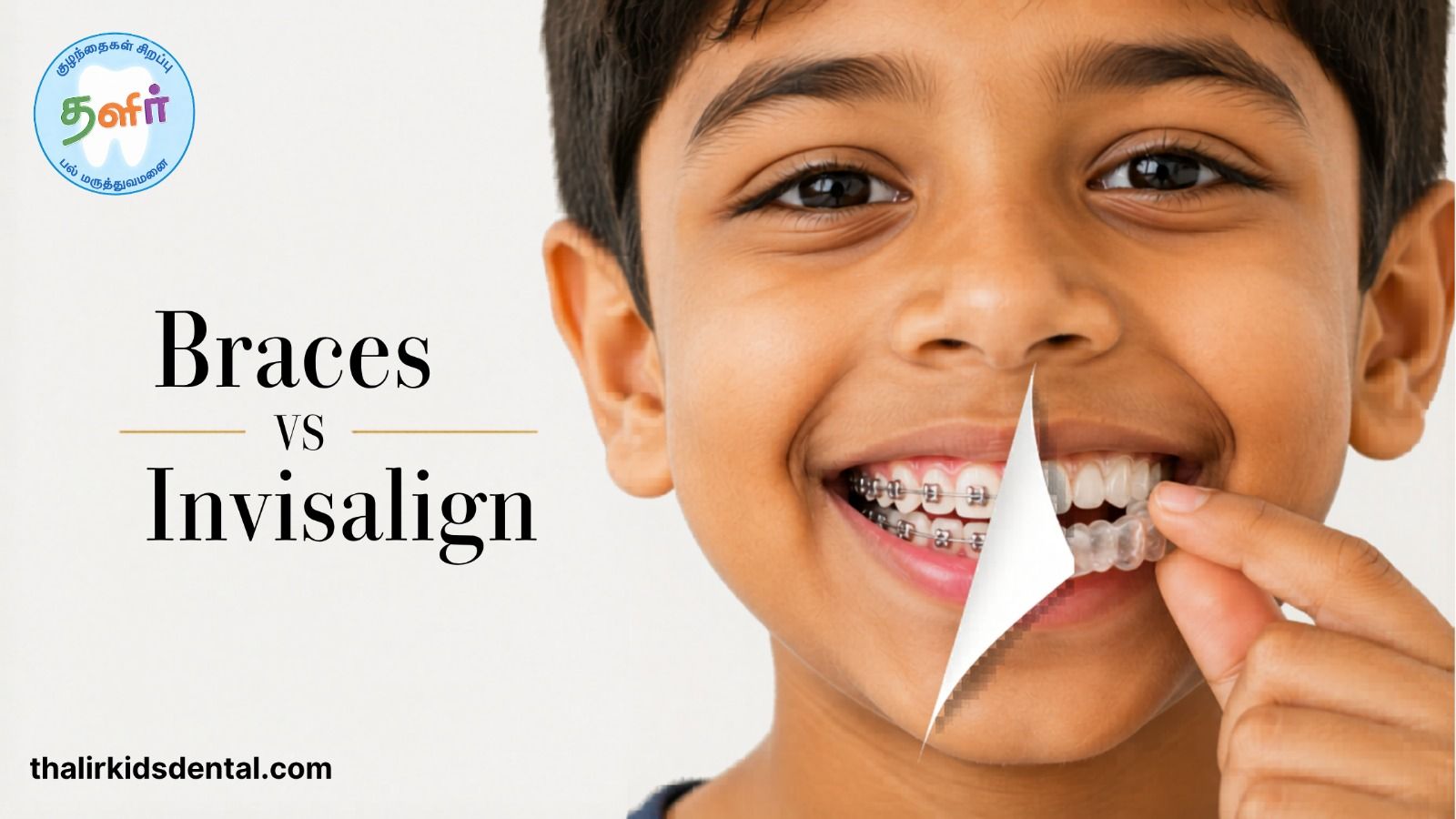
Braces for Kids vs Invisalign What Every Parent Should Know
Every parent dreams of seeing their child grow up with a healthy, confident smile. While regular brushing, healthy eating, and routine dental check-ups are essential, some children may also need orthodontic treatment to correct crooked teeth or bite problems. When parents hear that their child needs treatment, one question naturally comes to mind:
Should my child get traditional braces or Invisalign?
Understanding Braces for Kids vs Invisalign helps parents make an informed decision based on their child's age, dental condition, and daily routine. Both treatments straighten teeth effectively, but they work differently and are suitable for different situations.
At Thalir Kids Speciality Dental Clinic, we help families choose the most suitable orthodontic treatment to create healthy, beautiful smiles that last a lifetime.
Why Do Some Children Need Orthodontic Treatment?
Children's teeth and jaws continue developing throughout childhood. Sometimes permanent teeth do not erupt in the correct position, leading to problems such as:
- Crooked teeth
- Crowded teeth
- Gaps between teeth
- Overbite
- Underbite
- Crossbite
- Open bite
- Difficulty chewing
- Speech concerns
- Poor oral hygiene due to overlapping teeth
Early orthodontic evaluation allows dentists to identify these problems before they become more complicated.
What Are Traditional Braces?
Traditional braces consist of small metal brackets attached to the teeth and connected with thin wires. These wires gently apply pressure to move teeth into their proper positions over time.
Modern braces are smaller, more comfortable, and much easier to manage than older designs.
Advantages of Braces
- Suitable for complex orthodontic problems
- Excellent for severe crowding
- Corrects bite issues effectively
- Works continuously because it cannot be removed
- Delivers predictable results
Things Parents Should Know
- Metal brackets are visible.
- Certain sticky or hard foods should be avoided.
- Extra care is needed while brushing.
- Regular adjustment appointments are required.
What Is Invisalign for Kids?
Invisalign uses a series of clear, removable aligners that gradually move teeth into better alignment. Each aligner is custom-made to fit the child's teeth and is replaced every one to two weeks according to the treatment plan.
Because the aligners are nearly invisible, many children and parents appreciate their discreet appearance.
Advantages of Invisalign
- Clear and almost invisible
- Comfortable with no metal wires
- Easy to remove while eating
- Easier brushing and flossing
- Fewer food restrictions
- Suitable for sports and musical instruments
Things Parents Should Know
Children must wear the aligners for 20–22 hours every day. If they frequently remove them or forget to wear them, treatment may take longer or become less effective.
Which Treatment Is Better for Young Children?
For children aged 6 to 10 years, traditional braces are often recommended when significant correction is required.
Braces are usually the better choice if your child:
- Has severe crowding
- Has bite problems
- Needs precise tooth movement
- Frequently forgets responsibilities
- May not consistently wear removable aligners
Invisalign may be suitable for children who:
- Have mild to moderate alignment concerns
- Can responsibly wear aligners throughout the day
- Maintain excellent oral hygiene
- Prefer a discreet appearance
- Participate in sports or play musical instruments
The right treatment always depends on a professional orthodontic examination.
What Is the Ideal Age for Orthodontic Evaluation?
The American Association of Orthodontists recommends that children receive their first orthodontic evaluation by around 7 years of age.
This does not necessarily mean treatment will begin immediately. Instead, early evaluation allows dentists to monitor jaw growth, identify developing problems, and recommend treatment at the right time if needed.
How Long Does Treatment Take?
Treatment duration varies depending on the child's individual dental condition.
Typical treatment times include:
- Mild cases: 6–12 months
- Moderate cases: 12–18 months
- Complex cases: 18–24 months or longer
Following the dentist's instructions and attending regular appointments helps achieve the best results.
Caring for Braces and Invisalign
Good oral hygiene is essential during orthodontic treatment.
Children with Braces Should:
- Brush after every meal.
- Use orthodontic-friendly brushes.
- Avoid sticky sweets and hard foods.
- Attend scheduled adjustment visits.
Children Using Invisalign Should:
- Remove aligners before eating.
- Brush teeth before wearing aligners again.
- Clean aligners daily.
- Wear aligners for at least 20–22 hours each day.
Consistent care helps prevent cavities and ensures successful treatment.
Why Early Treatment Matters
Ignoring alignment problems may lead to:
- Increased tooth wear
- Difficulty cleaning teeth
- Higher cavity risk
- Gum problems
- Jaw discomfort
- Speech difficulties
- Reduced confidence
Early orthodontic treatment often reduces the need for more complex procedures later.
Why Choose Thalir Kids Speciality Dental Clinic?
Whether your child needs traditional braces or Invisalign, choosing the right pediatric dentist makes all the difference. If you're searching for a trusted kids dentist near you, our experienced team provides personalized care for every stage of your child's smile journey.
Frequently Asked Questions
1. Are braces better than Invisalign for children?
Braces are often better for children with complex bite problems or severe crowding because they provide continuous, controlled tooth movement.
2. Can a 7-year-old get Invisalign?
Some children may qualify, but suitability depends on dental development and whether they can wear the aligners consistently.
3. Does Invisalign hurt?
Children may experience mild pressure for a few days after switching to a new aligner, but most adapt quickly.
4. Which treatment is faster?
Treatment time depends on the child's dental condition rather than the appliance itself. Your pediatric dentist will recommend the most efficient option.
5. Can children play sports with braces?
Yes. A custom mouthguard is recommended to protect both the braces and the teeth during sports activities.
Also Read our Blog on Why Early Dental Care Matters for Young Smiles
Frequently Asked Questions
Find quick answers to common questions about this topic.
Have questions about your child's dental health?
Our specialists at Thalir Dental Clinic are here to help.
Chat with Us